Quinn Zimmermann · 28 October 2026
Echovale's Underground Music Scene Fuels Youth Entrepreneurship Through Converted Warehouse Venues and Pop-Up Events
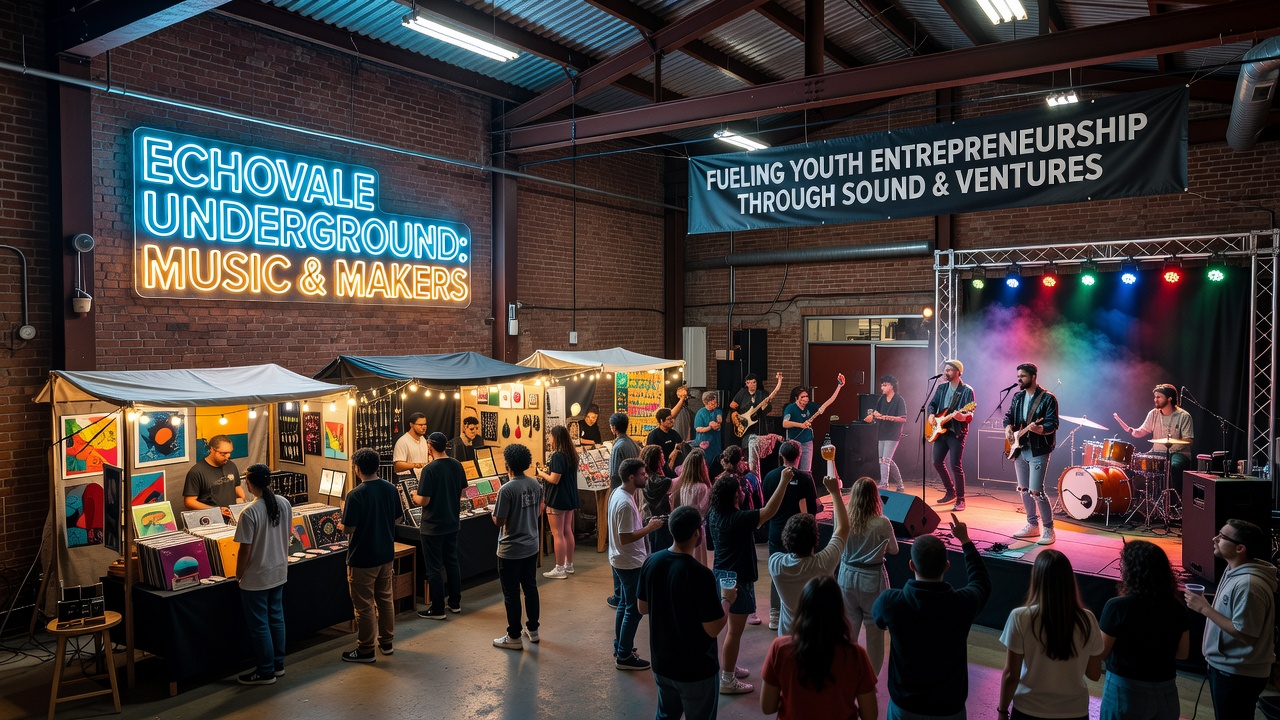
Echovale's underground music scene has grown into a network of converted warehouse venues and recurring pop-up events that connect local youth with hands-on business opportunities, and observers note this development traces back to early 2020s adaptive reuse projects in the city's former industrial districts. Data from local business registries shows more than 40 warehouse spaces have received permits for temporary music use since 2023, with many operated by entrepreneurs under age 30 who handle everything from booking to technical production.
Warehouse Conversions Create Entry Points
Former factory buildings along the rail corridor now host regular shows after owners install basic soundproofing, portable stages, and modular seating that meets fire code requirements, and city records indicate these modifications often cost between $15,000 and $45,000 per site when completed by small crews rather than large contractors. Young operators lease the spaces on short-term agreements that allow them to test different event formats without long-term debt, which researchers at regional universities have linked to higher rates of first-time business formation in creative sectors.
One group of recent graduates launched a lighting and staging rental service after working several pop-up nights, and their equipment now appears at venues across three neighboring towns. Another team started selling custom ear protection and merch at events before opening a small online store that expanded to a physical location near the main rail station.
Pop-Up Events Drive Revenue Streams
Pop-up events rotate between available warehouses and outdoor lots, typically running on weekend nights with ticket sales handled through simple mobile apps that promoters develop in-house, and attendance figures compiled by the Echovale Chamber of Commerce reached an estimated 12,000 participants across 28 events in the first half of 2026. Organizers keep overhead low by sharing generators, security personnel, and promotional graphics, which allows profit margins to stay above 30 percent on successful nights according to anonymous surveys conducted by a local accounting collective.
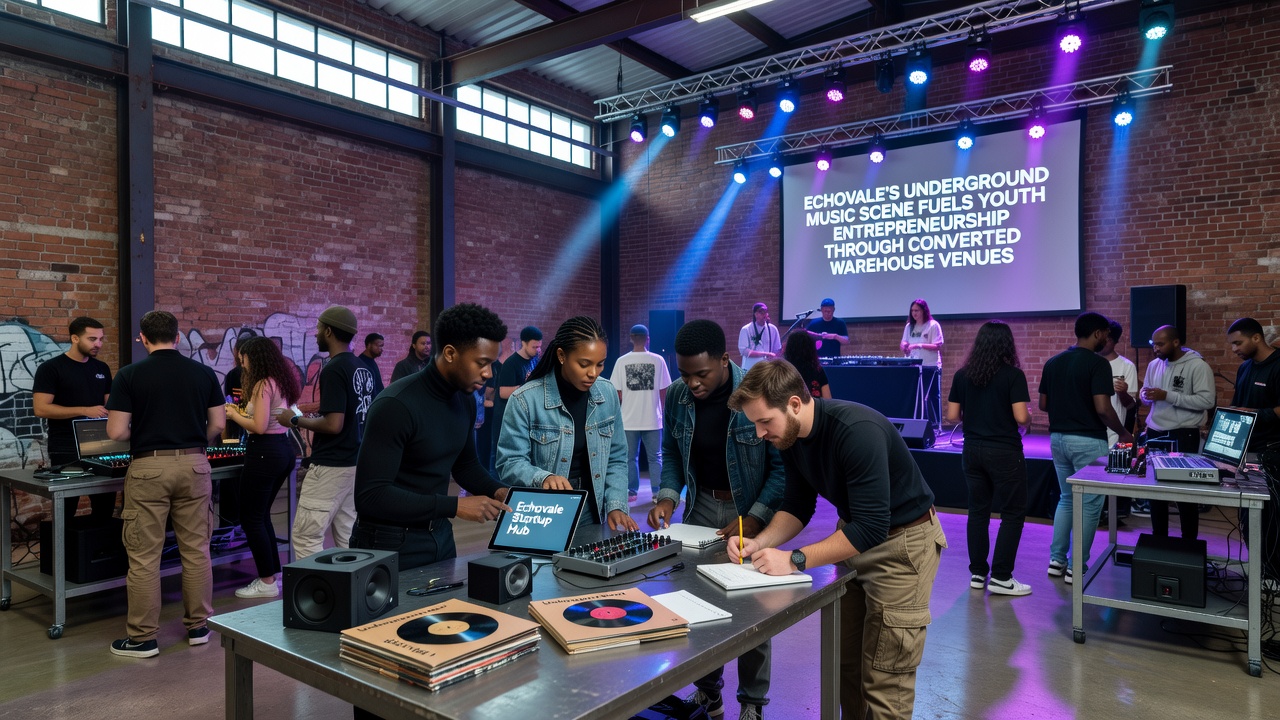
October 2026 features a scheduled series of four warehouse showcases that highlight emerging electronic and indie acts, and organizers have already secured permits through the city's special events office while coordinating with nearby food trucks for additional vendor fees. These events also serve as testing grounds for new products, including a line of rechargeable portable speakers designed by a local engineering student who first demonstrated prototypes at earlier pop-ups.
Support Networks and Skill Development
Workshops on sound mixing, basic accounting for events, and social media promotion run monthly inside one of the larger converted spaces, and attendance logs show consistent participation from residents aged 18 to 28 who later report starting their own micro-businesses within six months. Mentorship pairings connect experienced promoters with newer entrants, and city-funded small business centers provide free access to legal templates for liability waivers and vendor contracts.
Figures from the Canada Council for the Arts indicate similar patterns in other mid-sized cities where adaptive reuse of industrial buildings correlates with increased youth self-employment in the performing arts, while a separate analysis by the National Endowment for the Arts highlights measurable growth in creative economy jobs when venues remain accessible through low-barrier permitting processes.
Regulatory Framework and Future Outlook
Echovale's planning department maintains a streamlined approval path for temporary music use that requires noise monitoring reports and neighbor notification rather than full rezoning, and this approach has kept compliance costs manageable for operators who document their activities through shared spreadsheets and photo logs. Insurance providers have begun offering event-specific policies tailored to warehouse settings, further reducing startup barriers.
Conclusion
The combination of physical infrastructure, recurring events, and skill-building programs continues to expand the number of youth-led enterprises tied to Echovale's music activities, with new warehouse applications submitted each quarter and pop-up schedules already drafted into early 2027. Local records show steady increases in related business licenses, confirming the scene's role as an ongoing incubator for practical entrepreneurship.